
When you encounter a fastener that refuses to budge, you are facing one of the most common mechanical challenges in maintenance work. Whether you are performing routine repairs on a vehicle, maintaining outdoor equipment, or simply trying to disassemble an older structure, a seized connection can stop progress entirely. Deciding whether to rely on a specialized chemical agent or to apply heat and mechanical force is a common decision point for anyone working with corroded metal. Understanding how these substances interact with oxidation allows you to select the right approach for the specific condition of your hardware.
Evaluating Methods for Releasing Seized Fasteners
The process of loosening a rusted connection is generally a battle against the oxidation that bonds the threads of a bolt to the surrounding metal. The primary goal of any intervention is to reduce friction and break the chemical bond between the rust particles.
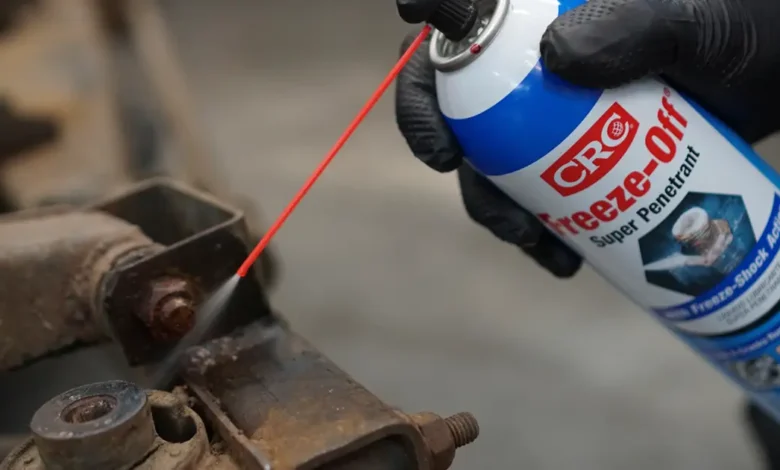
Many people reach for a penetrating fluid as their first line of defense. These products are formulated with low viscosity, allowing them to seep into microscopic gaps between threads. Once inside, they may provide lubrication that makes the initial turn significantly easier. Using the best penetrant for rusted bolts often involves a patience-based strategy: applying the fluid and allowing it adequate time to travel through the threads before attempting to move the fastener.
Alternatively, some situations call for a rust remover applied as a soak or a gel. This is common when a part can be removed and submerged in a bath. These products are typically formulated to chemically convert or dissolve the oxide layer, which can be effective for cleaning up hardware that you intend to reuse.
What Each Approach Tends to Involve
The use of penetrating fluids typically follows a few steps. First, it is common to clear away as much surface debris or loose flake-rust as possible using a wire brush. After the area is cleaned, applying the penetrant and letting it sit for a meaningful duration—sometimes hours—can improve the likelihood of success. In some cases, applying a light tapping force to the bolt head after the fluid has been applied can help the liquid penetrate deeper by creating small vibrations that break up rust bridges.
For those using a rust remover, the process is more focused on immersion. If you are dealing with a bracket or a bolt that can be detached, soaking it in a specialized solution allows the chemical components to reach every surface area. This is often an overnight process. Once the rust has been chemically lifted, the part usually requires a thorough rinsing and drying to prevent “flash rust,” which is the rapid oxidation that occurs on clean, bare metal when it is exposed to air and humidity.
Factors That Tip the Decision
Several variables influence which method will be most effective for your specific project. One of the most important factors is the accessibility of the connection. If you are working on a stationary structure, you are limited to surface-applied penetrants. In such cases, the quality of the product is critical because you cannot rely on immersion. Look for fluids that are designed to resist evaporation so they remain active for the necessary duration.
Another factor is the severity of the rust. If the threads are heavily encrusted, chemical agents alone might not be sufficient. In these scenarios, many people pair the best penetrant for rusted bolts with thermal expansion. Briefly heating the metal surrounding the bolt can cause the outer material to expand slightly more than the bolt itself, effectively cracking the bond. If you choose this route, always exercise extreme caution regarding nearby flammable materials and be aware of the effect of heat on surrounding components, such as rubber seals or plastic housings.
Material type also plays a role. Steel fasteners, which are frequently used in outdoor or automotive applications, react differently to certain rust-dissolving chemicals than other metals. Always verify that the product you select is appropriate for the material you are treating to avoid accidental surface damage or pitting.
Aligning the Choice with Individual Needs
To choose the right path, start by assessing the goal. If your objective is to preserve the fastener for reuse, a soak-style rust remover is often the superior choice because it cleans the entire surface area without the need for aggressive mechanical grinding. Conversely, if your goal is simply to get the part moving so that a repair can be completed, the speed and ease of a high-performance penetrant may be the more practical solution.
When visiting a hardware supply center, you will notice a wide variety of formulas. Rather than focusing on marketing claims, prioritize products that list their compatibility with various metals. It is also helpful to ask the provider about the shelf stability of the product, as effective penetrants should maintain their consistency over time. If you frequently work with rusted equipment, having a small dedicated collection of both penetrants for in-place repairs and immersion-based removers for restoration tasks will ensure you are prepared for most challenges.
Finally, remember that the most successful repairs are often those where force is applied gently and consistently. Even when using the best chemical aids, taking a slow approach protects the head of the bolt from rounding off or snapping. By combining the right chemical assistance with a measured, patient physical approach, you can effectively manage the challenges of oxidation and complete your mechanical tasks with confidence.